In the Shoes of a CMO: Anne-Flore Loyer (CCI Hauts-de-France) on Marketing Transformation, AI & Value Creation
Future of marketing
Growth Marketing
2/6/26
For many years, the Chamber of Commerce and Industry (CCI) Hauts-de-France operated through a decentralized model, with communication teams embedded across its local entities. Over the past few years, however, the organization has undergone a significant transformation. Reorganized four years ago, its Marketing and Communications Department now functions as a regional in-house agency, bringing together a creative studio, a digital team, a marketing department and local field representatives.
Serving a region of nearly 387,000 businesses, CCI Hauts-de-France continues to deliver on its three core missions: supporting companies, developing talent and managing strategic infrastructure such as ports and airports. But its business model is evolving as well. An increasing share of its activities now relies on paid services, creating stronger expectations around revenue generation, lead conversion and offer visibility.
Leading this transformation is Anne-Flore Loyer, who oversees an organization still in transition, balancing team alignment, marketing maturity and the gradual integration of artificial intelligence.
Anne-Flore Loyer:
The first priority is aligning our marketing and sales teams. This is particularly important because our organization was historically structured around separate business units, with one side focused on business support services and the other on education and training. Over time, this created different ways of working, processes and cultures.
Today, we are working to build a more integrated approach based on shared tools, consistent messaging and stronger collaboration between teams. We want to encourage cross-selling opportunities and create a unified customer experience across all our services.
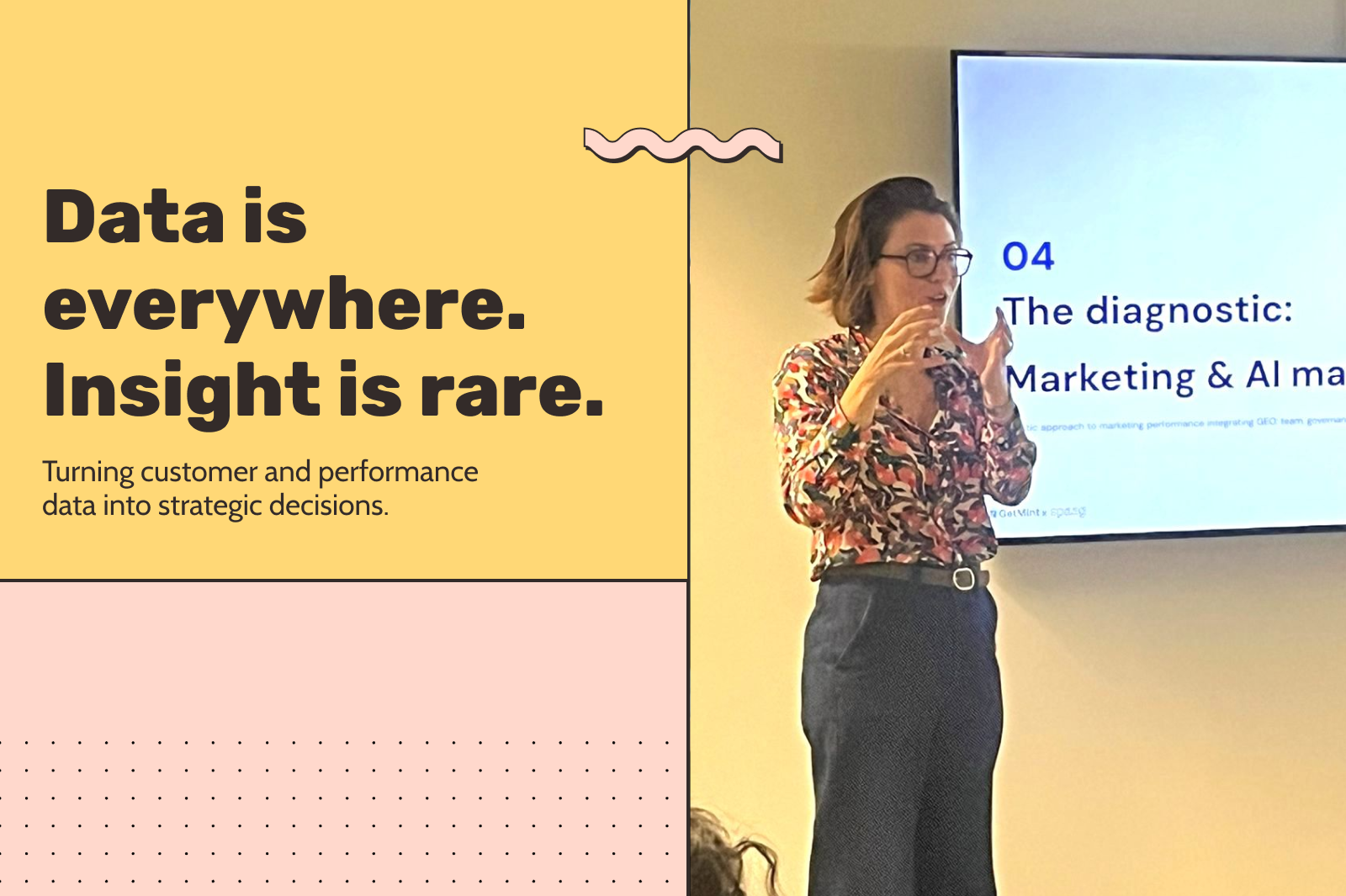
The second major topic is artificial intelligence. We are moving forward progressively through proof-of-concept projects because the challenge is not simply to test tools, but to create a secure and valuable framework for employees. Many people are already experimenting with AI independently, so we created a cross-functional AI committee to bring more structure, governance and long-term vision to these initiatives.
Our objective is clear: within CCI Hauts-de-France, AI should be viewed as a tool for augmentation, not replacement.
A.-F. L.:
We always start with concrete business use cases.
One of our most advanced projects is an AI-powered assistant on our platform, les-aides.fr. The objective is to help companies navigate more efficiently and identify the funding programs, grants or support schemes that best match their specific situation, whether related to innovation, cash flow management, business expansion or investment.
The project is still being finalized, but it already demonstrates the practical value AI can deliver.
At the same time, we are closely monitoring developments around GEO (Generative Engine Optimization). We strongly believe that search behavior will become increasingly conversational. As a result, our challenge today is to build the right foundations to ensure our content remains visible and relevant within AI-driven search environments and large language model ecosystems.
A.-F. L.:
We do not really look for suppliers. We look for partners.
The distinction matters because we already possess significant expertise internally. When we work with external specialists, it is generally to support transformation initiatives, challenge our assumptions and help us structure complex topics.
Our collaboration with Spaag is a good example. Initially, we engaged them to work on positioning, editorial strategy, value proposition and visual identity. The underlying question was simple: how do we remain desirable when we are already highly legitimate?
Over time, the collaboration expanded toward more internal challenges, particularly sales and marketing alignment and the structuring of our marketing function, which is still relatively young.
That is what makes the relationship valuable. We needed a partner capable of bringing methodology, supporting organizational change and helping communicate key messages during a period where many different expectations are converging around marketing.
A.-F. L.:
We have significantly strengthened our internal capabilities over the last few years.
Today, we have a strong creative studio that has evolved considerably thanks to the addition of more advanced art direction capabilities. This helped reignite creative momentum across the organization.
We have also built a genuine digital department with project management, functional expertise, technical skills and even development capabilities. This gives us greater agility, helps us unblock initiatives faster and makes it easier to launch proof-of-concept projects.
Beyond that, we have reinforced our content strategy, CRM capabilities, customer insight functions, data expertise and digital performance management.
The objective is not to do everything ourselves. The goal is to maintain a strong internal foundation capable of handling most strategic priorities while engaging external partners as true peers.
A.-F. L.:
I do not recruit solely for technical skills. Interpersonal abilities and human qualities matter just as much. Of course, expertise is important, but people also need to fit within the team, collaborate across functions and contribute positively to the collective dynamic.
We have a large and diverse team composed of versatile profiles. That versatility is important to me because it prevents people from becoming siloed, encourages curiosity and strengthens long-term employability.
It is something I value highly.
A.-F. L.:
The role is evolving because our business model is evolving.
Historically, a significant portion of our activities relied on publicly funded or subsidized services. Today, our objective is to expand our portfolio of paid services. Naturally, this changes the expectations placed on marketing.
We need to improve how we position our offers, qualify leads, optimize conversion and ultimately contribute more directly to revenue growth.
This also requires a much more sophisticated performance management approach. We need to understand what works, stop investing in what does not and use data to support better decision-making.
The challenge is no longer proving the value of marketing. Marketing is already highly requested across the organization.
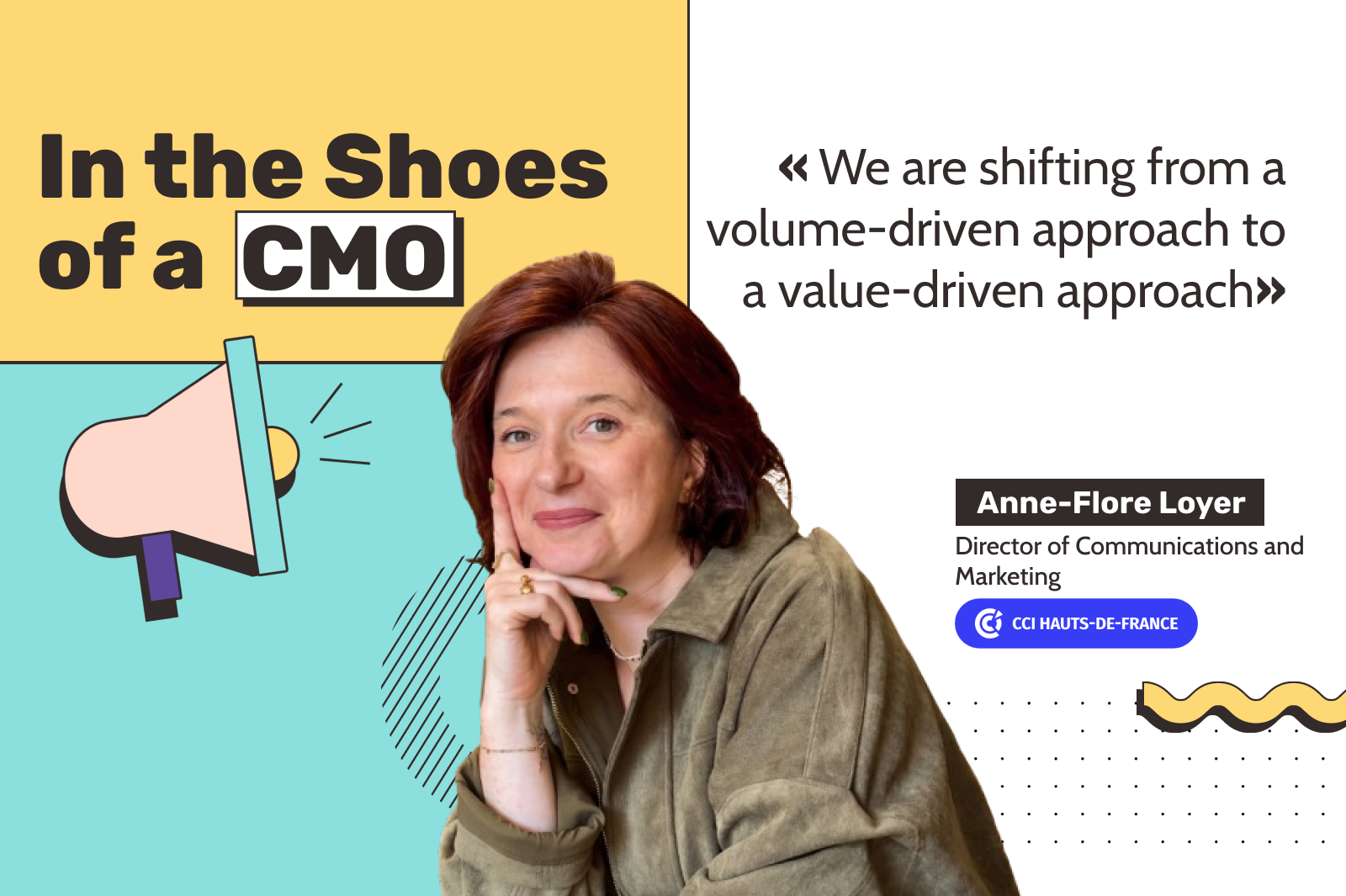
The real challenge is helping the organization transition from a volume-driven mindset to a value-driven mindset.
L’équipe Spaag.
Spaag is a consulting firm specialising in growth marketing, digital marketing, data, and AI. Our mission is to support our B2B and B2C clients in achieving their business objectives, both in France and internationally.